The old analogue phone network (PSTN) is permanently switched off on 31 January 2027 and, per ISPreview reporting on 22 November 2026, the date will not be delayed again. Around a million copper lines are still active UK-wide - roughly 300,000 of them in business premises - with 112,794 remaining in Scotland alone, plus 207,135 in Northern England and 32,809 in Northern Ireland, per Openreach's October 2026 warning.
If your business still has anything plugged into a phone socket, it stops working on that date. The trap is that the line rarely serves just the desk phone - it is the things nobody thinks of as "the phone line" that get missed.
What is actually being switched off
The PSTN is the copper-line telephone network that has carried voice calls - and a surprising amount else - for decades. Openreach's Big Switch Off programme is retiring it in favour of digital voice over broadband. Replacement is not automatic: each service on the line needs its own migration, and the deadline applies to the line, not just to making calls.
What might be on your line
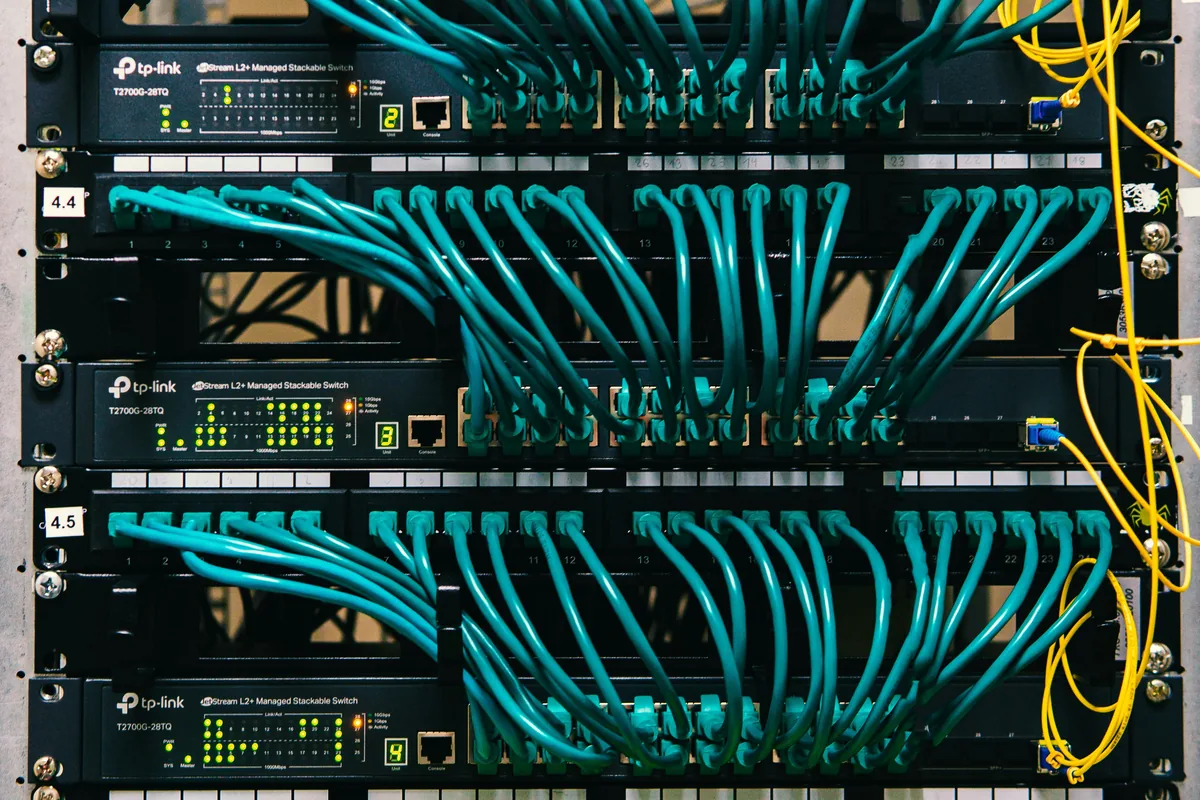
Businesses typically discover non-phone devices on PSTN only when something fails. Check every socket and comms cabinet for:
| System | What to check | Who to ask |
|---|---|---|
| Payment terminals / EPOS | Does the card machine use a dial-up line, or the network/Wi-Fi? | Your payments provider |
| Lift emergency phones and auto-diallers | Auto-diallers must reach a monitored line after switch-off | Your lift maintenance company |
| Fire alarm communication panels | Is the alarm's signalling path PSTN or IP/cellular? | Your alarm maintainer |
| Security monitoring | Monitored intruder alarms often still use PSTN signalling | Your security company |
| Door entry / access control / gates | Intercoms and automated gates frequently dial out | Your installer |
| Telemetry / building energy management | Remote meters and BMS may dial home over copper | Your facilities or metering supplier |
| Fax lines | Yes, some still exist | Whoever still faxes you |
If you genuinely cannot tell whether a line is in use, your telecoms bill is the honest answer: anything billed as a PSTN or analogue line is live until you cancel or migrate it.
The replacement: digital voice
For actual telephony, the migration path is VoIP - voice over your broadband connection. For most offices that means business VoIP and Teams Phone, which also keeps numbers working if staff work from home or another site. Alarm, lift and payment systems are not VoIP jobs: they need their manufacturers or maintainers to confirm an IP or cellular alternative before January.
What to do before 31 January 2027
- List every line on your telecoms bill and every device in your comms cabinet.
- Ask each maintainer in the table above, in writing, whether their kit works after PSTN.
- Move the phone service to VoIP early - do not leave porting to the last month.
- Test the fallback for anything life-safety related (lifts, fire panels) - these have compliance weight, not just convenience.
- Cancel cleanly once migrated, so you are not still paying for a dead line in February.
We have covered the run-up in our earlier pieces on the ISDN switch-off deadline and VoIP migration. If you want a pair of eyes on the comms cabinet, a free IT audit includes a look at what is actually on your lines - or call 07967 928551, answered by an engineer 24/7.
The mistakes we see firms make
The first is assuming the broadband will handle it. Voice and broadband travel on the same copper pair but they are different services - keeping your internet working does not keep a phone line alive. The second is assuming the maintainer will flag it. Alarm companies, lift firms and payment providers are contacting customers, but plenty of smaller accounts fall through the cracks; if you have not heard from them, ask. The third is waiting for the line to fail to find out what was on it. A line that goes dead on 31 January takes whatever depended on it with no warning - and discovering your card machine only took phone line payments on the first busy day of February is an expensive way to learn.
If you rent rather than own
Where equipment belongs to a landlord or a supplier - lift phones in a managed building, a shared alarm system, a leased EPOS terminal - the responsibility is usually theirs, but the disruption is yours. A short email to each asking for written confirmation that their kit works after the PSTN date is a five-minute job that puts the obligation on paper. Keep the replies; if something fails later, the paper trail matters.
About the author
Timothy is the founder of Riverbank IT Systems, a Glasgow IT support company that has been trading since 2003. He writes the practical guides and research published in our news section.
Discuss your IT priorities
Get a free IT audit from Riverbank IT Systems. Free initial advice, with no obligation to proceed.